

 Feed back
 Privacy Policy
Cosmic Insights India.
It was a crisp January morning in Bengaluru when Priya Sharma canceled her dream job interview. Not due to illness, fear, or scheduling issues—but because her astrologer said Mercury was "afflicted" in her *kundli*. Her mother had insisted: "The stars know better." Two weeks later, she watched someone else walk into the role she'd trained years for. She wasn't angry—at first. But by March, frustration turned into curiosity: *Are the stars really guiding us... or are we just reading patterns that don't exist?*
In 2025, this story isn't rare. Across India—from startup founders consulting *jyotishis* before funding rounds to couples matching horoscopes before engagement—astrology remains deeply woven into daily life. Yet, at the same time, Indian astronomers are launching advanced telescopes, detecting distant galaxies, and decoding black holes with unprecedented precision. So how can a nation lead in space science while also leading in belief in celestial fate?
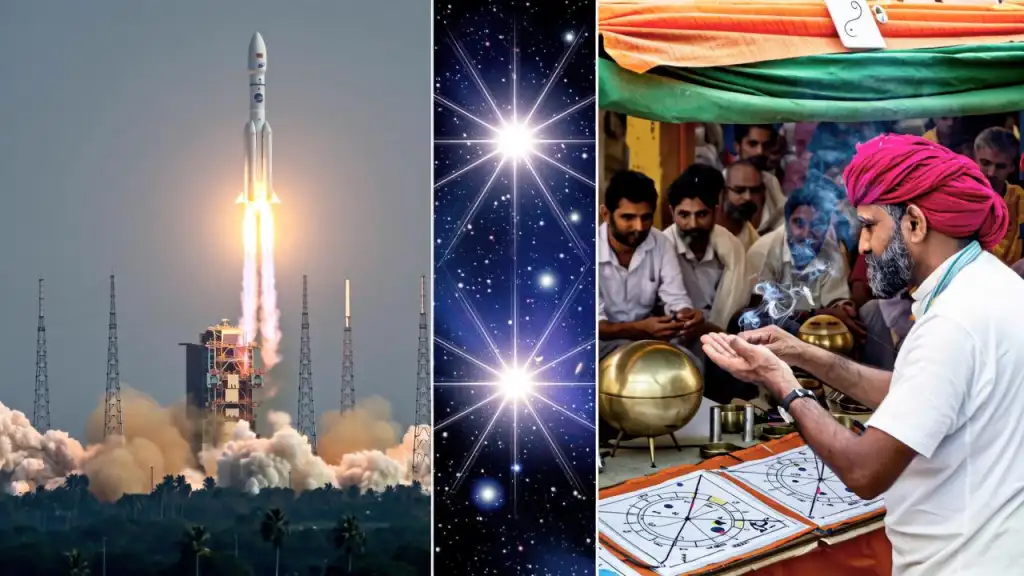
Welcome to the great divide: astronomy vs astrology. One is a rigorous science grounded in physics, mathematics, and observation. The other is a symbolic system rooted in tradition, intuition, and cultural meaning. And today, more than ever, we must ask: *Which one reveals truth—and which one tells stories?*

Let's begin with a simple distinction—one often blurred in public conversation.
Astronomy is the scientific study of celestial objects: stars, planets, galaxies, and the universe's structure and evolution. It uses telescopes, satellites, and mathematical models to understand how the cosmos works. When ISRO launched Aditya-L1 in 2023 to study the Sun, that was astronomy.
Astrology, on the other hand, claims that the positions and movements of celestial bodies influence human affairs and personality traits. Whether it's your Western sun sign ("You're a fiery Aries!") or your Vedic *rashi*, astrology interprets the sky as a mirror of destiny.
They both look up. But only one looks *with evidence*.
India stands at a unique crossroads. In 2025, it ranks among the top ten countries in astronomical research output, thanks to institutions like IIA, NCRA, and growing investments in radio astronomy. The Square Kilometre Array project includes Indian contributions, and future lunar missions are already in planning.
Yet, according to a 2024 Pew Research survey, over 73% of Indians consult astrologers regularly, especially during major life decisions—marriage, business launches, even medical treatments. Schools in some states still teach astrology as part of "Indian knowledge systems," despite protests from scientists.
This contradiction isn't hypocrisy—it's heritage. For centuries, Indian scholars blended observational astronomy (*jyotiṣa*) with spiritual interpretation. Ancient texts like the *Surya Siddhanta* contained remarkably accurate calculations of planetary motion—while also prescribing rituals based on star alignments.
But here's what's changed: we now have tools to test those claims.
And when we do, the results aren't kind to astrology.
Here are three scientific star facts that most horoscopes ignore:
1. The Zodiac Has Drifted Off Course
The zodiac used in Western astrology was defined over 2,000 years ago, based on Earth's position relative to constellations. But due to axial precession—a slow wobble in Earth's rotation—the actual alignment has shifted by about 24 degrees. That means if you were born under "Pisces," the Sun was likely in *Aquarius*. Astronomers call this the *precession of the equinoxes*. Astrologers? Most just ignore it.
2. There Are 13 Constellations in the Zodiac, Not 12
In 1930, the International Astronomical Union officially mapped the boundaries of all 88 constellations. One lies along the ecliptic (the Sun's path): Ophiuchus, the serpent-bearer. It occupies the sky from November 30 to December 17. So why isn't there a 13th sign? Because astrology isn't about accuracy—it's about symmetry and symbolism.
3. Planetary Gravity Is Negligible on Humans
Some defenders claim planets exert gravitational or electromagnetic influences on us. Let's test that. Jupiter, the largest planet, exerts about 0.0000034 newtons of force on a newborn baby. A nurse standing two meters away exerts *twice* that much gravity. Even the Moon, which controls tides, has no measurable effect on human behavior. Decades of studies—including a famous 1985 double-blind experiment published in *Nature*—show zero correlation between astrological signs and personality, intelligence, or success.
So why does astrology persist?
Because humans crave meaning. And the stars? They're beautiful storytellers.
If astrology isn't science, then what is it?
Think of it not as a failed theory of physics—but as a cultural language of meaning. Like mythology, religion, or art, astrology helps people navigate uncertainty. It offers comfort, identity, and a sense of control in chaotic times.
Nowhere is this more evident than in Vedic astrology, known locally as *Jyotish Shastra*.
In 2025, you can download an app that generates your *kundli* in seconds. Platforms like ClickAstro, Astrotalk, and Bejan Daruwalla's portal see millions of users monthly. During eclipse seasons, traffic spikes by 300%. Influencers host live *pujas* on Instagram. AI-powered chatbots give personalized predictions.
But Vedic astrology isn't new. Its roots go back to the Vedas, particularly the *Brihat Parashara Hora Shastra*, compiled around 500 CE. Unlike Western astrology, which focuses on sun signs, Jyotish uses a complex system involving:
And yes, many of its early astronomical observations were impressively precise. Ancient Indian astronomers calculated the length of the solar year within minutes of modern values. They understood eclipses long before Europe did.
But precision in observation doesn't equal validity in prediction.
In 2023, the Indian Council of Philosophical Research funded a controversial study on Vedic astrology validity. Researchers analyzed 2,000 birth charts against life outcomes—career success, marriage stability, health crises. After controlling for socioeconomic factors, no statistically significant correlation was found between planetary positions and real-life events.
Still, belief holds strong.
Why?
Because Vedic astrology isn't just about prediction. It's about ritual, timing, and social cohesion. Choosing a *muhurta* (auspicious moment) for a wedding isn't just superstition—it's a way of aligning families, honoring tradition, and reducing anxiety through structure.
As Dr. Ananya Rao, a sociologist at JNU, put it: "For many Indians, consulting an astrologer isn't about rejecting science. It's about practicing culture."
Let's address the elephant in the room: Does any form of astrology work?
The short answer: No—not in the way it claims to.
The longer answer: Sometimes, but not because of the stars.
This is where psychology steps in.
In the 1950s, psychologist Bertram Forer gave students a "personalized" personality test. He then provided generic feedback—phrases like *"You have a great need for other people to like and admire you"*—and asked them to rate its accuracy. On average, students rated it 4.2 out of 5, believing it was uniquely tailored to them.
This became known as the Forer Effect—or the *Barnum Effect*: people tend to accept vague, general statements as highly personal insights.
Sound familiar?
Read your daily horoscope: *"Today is a good day to focus on relationships. Unexpected opportunities may arise. Stay open-minded."* These are emotionally resonant but universally applicable phrases. They feel true because our brains are wired to find patterns—even where none exist.
Meanwhile, the zodiac accuracy debate rages online. Proponents point to anecdotal successes: "My horoscope predicted my promotion!" Critics respond: confirmation bias. We remember the hits, forget the misses.
A 2024 meta-analysis in the *Journal of Consciousness Studies* reviewed 47 studies on astrology over 50 years. Conclusion? No replicable evidence that astrological predictions outperform chance.
Even NASA, often wrongly accused of hiding "truth" about astrology, states clearly: *"Astrology is not a science and is not supported by scientific evidence."*
But here's the twist: astronomy itself can feel magical.
Learning that the atoms in your body were forged in dying stars—that we're made of stardust—isn't just poetic. It's literal. Every carbon atom in your DNA was created in a supernova explosion billions of years ago. In that sense, the stars *did* shape you—just not your career path or love life.
So perhaps the real cosmic truth isn't about fate. It's about connection.
Q1: Is Vedic astrology scientifically valid?
No. While it contains historical astronomical knowledge, its predictive claims—such as linking planetary positions to marital success or financial fortune—have not passed scientific testing. Studies show no consistent, reproducible results.
Q2: Can astronomy predict human behavior?
Absolutely not. Astronomy studies physical laws governing celestial bodies. Human behavior involves biology, psychology, environment, and free will—none of which are influenced by star positions.
Q3: Why do so many educated Indians still believe in zodiac signs?
Belief isn't always about education. It's about identity, family tradition, and emotional security. Just as people enjoy fiction without believing it's real, many use astrology as a tool for reflection—not as literal truth.
We began with Priya, the woman who missed her job interview.
By late 2025, she enrolled in an astronomy course at IGNOU. She learned about light-years, dark matter, and the Doppler effect. She still respects her parents' beliefs—but now, when they ask about auspicious dates, she smiles and says, "Let's check the weather forecast instead."
She hasn't stopped looking up.
She's just learned to distinguish between light that travels billions of years to reach us... and stories we project onto the sky.
In the end, the stars don't dictate our fate.
But they do inspire us to ask better questions.
And in 2025, that might be the most powerful prediction of all.
【Disclaimer】The contents related to mentioned in this article are for reference only and do not constitute professional advice in any related field. Readers should make relevant decisions carefully based on their own circumstances and consult qualified professionals when necessary. The author and publisher shall not be liable for any consequences arising from actions taken based on the content of this article.
Arjun Mehta
|
2025.11.21


